Pakistan receives Iran
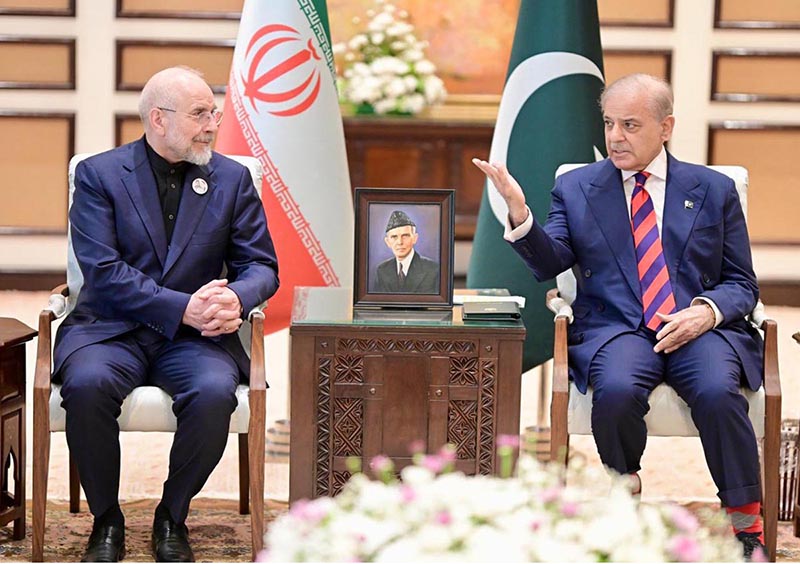
Prime Minister Muhammad Shehbaz Sharif meets Speaker Mohammad Bagher Ghalibaf as Pakistan begins its facilitation with the Iranian delegation.
Pakistan's Peace Mandate · PIDW26
Pakistan has shown that principled neutrality can keep adversaries talking. PIDW carries that instinct into international dispute resolution, with Islamabad as the seat where law, trust, and global commerce can meet.
The Islamabad precedent
When confrontation threatened the region, Pakistan chose facilitation, restraint, and persistent engagement.
The Islamabad Talks of April 2026 brought Iranian and United States representatives to Pakistan for direct engagement. Official accounts describe a sustained Pakistani effort to maintain the ceasefire, build confidence, and move the parties toward a negotiated outcome.
That process matured into the Islamabad Memorandum of Understanding in June 2026. Pakistan's civil and military leadership was publicly recognised for helping create a route away from escalation and back toward diplomacy.
Read the official accountLeadership & dialogue
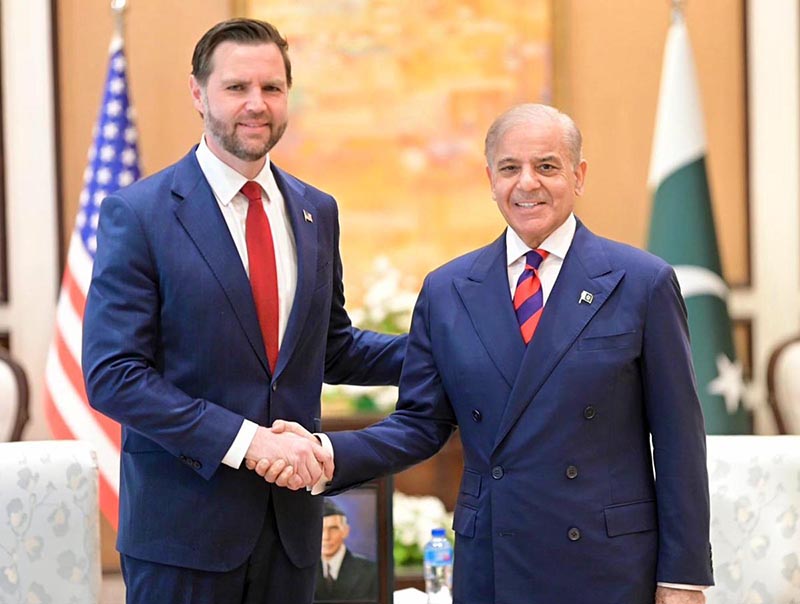
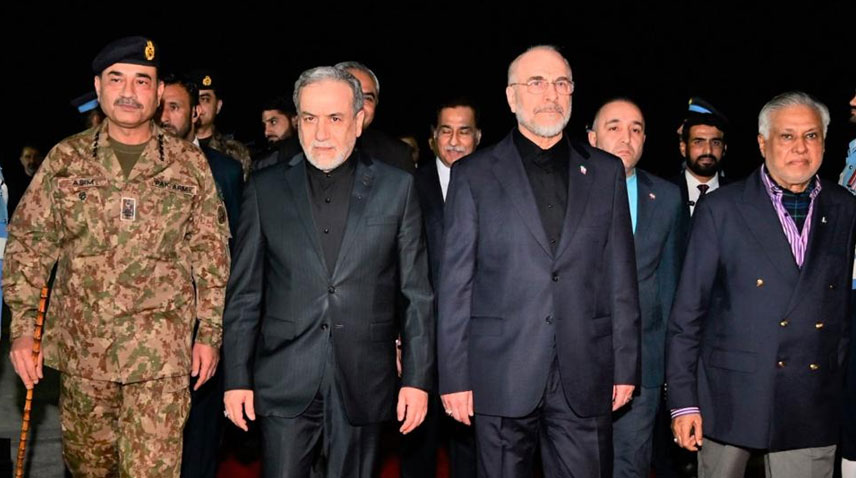
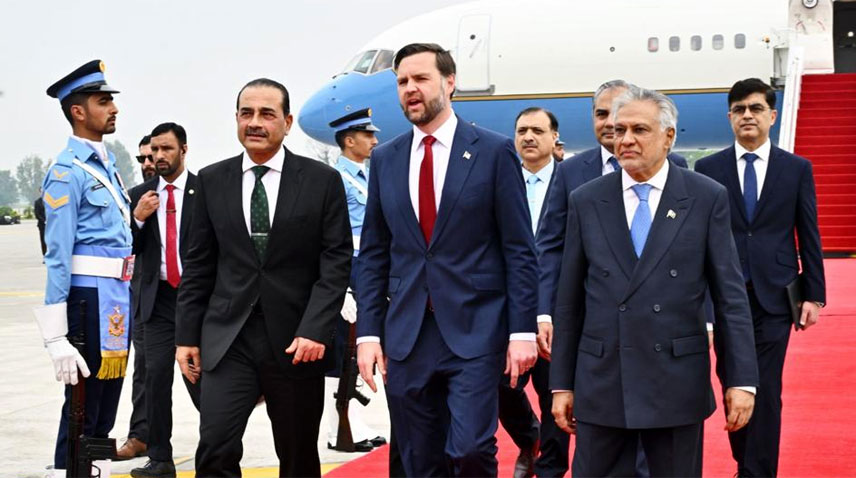
Four moments from the Islamabad Talks: Pakistan receiving both delegations and opening a space for direct engagement between Iran and the United States.
Prime Minister Muhammad Shehbaz Sharif meets Speaker Mohammad Bagher Ghalibaf as Pakistan begins its facilitation with the Iranian delegation.
Prime Minister Muhammad Shehbaz Sharif welcomes Vice President JD Vance before the United States delegation enters the talks.
Speaker Mohammad Bagher Ghalibaf and Foreign Minister Abbas Araghchi arrive with the Iranian delegation for Pakistan's facilitation process.
Vice President JD Vance arrives with senior United States representatives to join direct talks in Pakistan's capital.
Photography: Associated Press of Pakistan; Radio Pakistan.
One instinct. Two arenas.
State diplomacy and dispute resolution are different disciplines. Their most durable outcomes, however, depend on remarkably similar conditions: consent, credible neutrality, procedural trust, and the courage to remain at the table.
A process earns legitimacy when parties enter it with agency and understand the path ahead.
A trusted seat lowers the temperature and gives difficult conversations room to become workable.
Confidentiality, fairness, and respect protect relationships while hard questions are resolved.
The objective is not a pause in conflict, but a framework parties can implement and sustain.
PIDW'26 · Islamabad as Seat
PIDW26 asks a defining question: how can Islamabad become a trusted seat for international arbitration, mediation, adjudication, and dispute boards?
A seat is more than a venue. It is a legal home, an institutional promise, and a signal of confidence. Establishing Islamabad as a serious dispute-resolution seat requires capable courts, modern rules, credible institutions, specialist counsel, respected neutrals, and an international community willing to engage.
PIDW is where that ecosystem meets. It convenes practitioners, institutions, government, business, project owners, and the next generation to move the proposition from aspiration to practice.
A trusted seat for international dispute resolution.
A national proposition
PIDW is at the forefront of LET'S BRAND PAKISTAN, presenting the country not only through its markets and projects, but through its capacity to host, listen, convene, and resolve.
Pakistan's story can be one of professional excellence, legal confidence, cultural depth, and principled bridge-building. Each credible proceeding seated here, each international institution connected here, and each professional relationship formed here adds substance to that brand.
A country that can convene dialogue can also become a home for resolution.
10–11 October 2026 · Islamabad Marriott Hotel
Join the institutions, practitioners, businesses, and public leaders shaping Pakistan's next chapter in international dispute resolution.
Consented by 18 International Arbitration Centres under the banner of Pakistan International Dispute Resolution Week (PIDW) The Peace Mandate is a historic declaration of unity, cooperation, and peace through law.
At the heart of every resolution lies a conversation built on trust, fairness,
and respect. The Peace Mandate,
endorsed by 18 international arbitration and mediation centres, stands as a global
commitment to replace confrontation
with communication, and conflict with cooperation.
Through arbitration, mediation, conciliation, and dialogue, we reaffirm that peace
is not the absence of disagreement,
but the presence of understanding. The Peace Mandate unites legal institutions,
practitioners, and nations under a
shared vision to uphold justice through dialogue and preserve harmony through
collective wisdom.
01
Strengthen the use of neutral, transparent, and efficient arbitration mechanisms to prevent and resolve conflicts.
02
Create partnerships between arbitration centres, law firms, and governments to advance mutual understanding.
03
Promote mediation, collaboration, and joint development initiatives between states, investors, and institutions.
04
Ensure access to fair dispute resolution for all, supporting a global framework of stability and economic growth.
The Global South Arbitration Alliance (GSAA) stands as a collaborative platform uniting 18 leading arbitration and mediation centres across Asia, Africa, the Middle East, and beyond. Established under the vision of the Peace Mandate and the Pakistan International Dispute Resolution Week (PIDW), GSAA embodies a shared commitment to foster cooperation, capacity building, and harmonized dispute resolution frameworks across the Global South. Together, these institutions form a united voice for justice through dialogue and peace through understanding.
CIArb Pakistan Branch, Pakistan
HKIAC, Hong Kong International Arbitration Centre
TIAC, Tashkent International Arbitration Centre (Uzbekistan)
NEPCA, Nepal Council of Arbitration
ADRA, Australian Dispute Resolution Association
SIAC, Singapore International Arbitration Centre
ACDR, Afghanistan Centre for Dispute Resolution
Chamber of Arbitrators, Belarus
CIICA, Center for International Investment and Commercial Arbitration (Pakistan)
PEC, Pakistan Engineering Council
SAAROSH ADR Centre, Pakistan
AMCA, Armenian Mediation and Conciliation Association
SCL, Society of Construction Law (Singapore)
Rivonia Group of Advocates, CIArb SA Branch, South Africa
Legal Practitioners & Arbitrators Network, Nigeria
TCC ADR, Technology & Construction Court ADR (United Kingdom)
Business Development Division, China
CIArb Global, Chartered Institute of Arbitrators (International)
The Global South Arbitration Alliance (GSAA) is more than an agreement. It is a movement toward inclusive justice, regional cooperation, and sustainable peace.
Guided by the spirit of the Peace Mandate, this alliance aims to strengthen dispute resolution frameworks across emerging economies through:
Together, these institutions envision a future where arbitration replaces conflict, mediation replaces division, and peace becomes the foundation of progress.
PIDW26
Join the movement shaping the future of ADR in Pakistan and beyond.
10.11
Islamabad Marriott Hotel
Edition 04
OCT 2026